Activated carbon plays a crucial role in industries like water purification, air filtration, gold recovery, and food processing. As sustainability becomes a top priority, buyers and exporters are now focusing on ecofriendly activated carbon options.
Among the most popular choices are coconut shell activated carbon and wood-based activated carbon. Both are derived from natural sources, but they differ significantly in performance, sustainability, and applications.
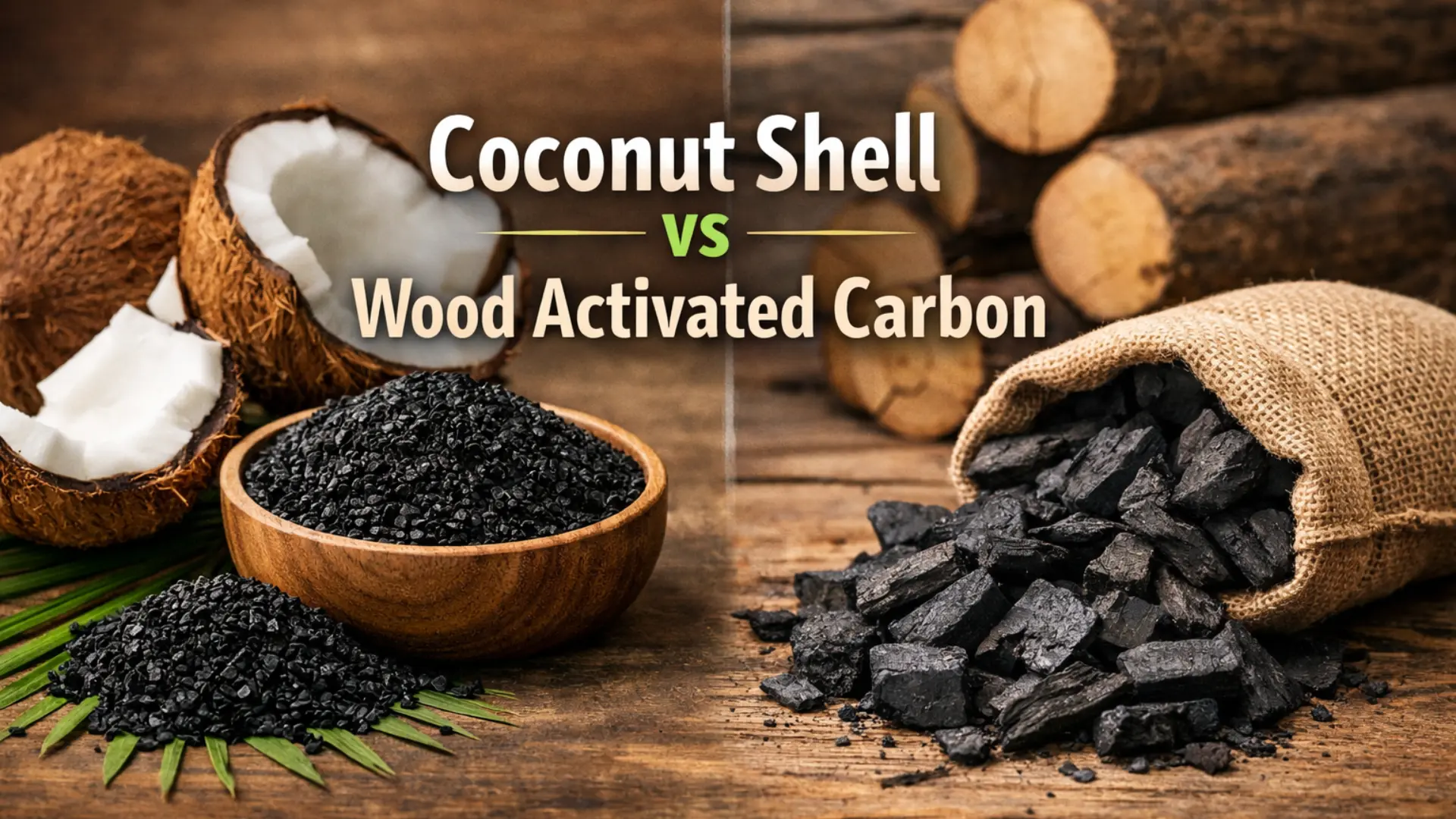
In this guide, we’ll explore wood based carbon vs coconut, helping exporters, procurement managers, and bulk buyers make informed decisions.
Activated carbon is a highly porous material made by processing carbon-rich substances at high temperatures. It is widely used for adsorption due to its large surface area.
Among these, renewable carbon sources like coconut shells and wood are gaining popularity due to environmental concerns.
Coconut shell activated carbon is produced from coconut shell charcoal, a by-product of the coconut industry. It is considered one of the most sustainable forms of biomass activated carbon.
Wood-based activated carbon is derived from timber or sawdust. It is another type of biomass activated carbon, widely used in industries requiring larger pore structures.
Understanding the difference between wood based carbon vs coconut is essential for selecting the right product.
Feature |
Coconut Shell Activated Carbon |
Wood-Based Activated Carbon |
|---|---|---|
Raw Material
|
Coconut shell charcoal
|
Wood / sawdust
|
Sustainability
|
Highly renewable
|
Renewable but depends on forestry practices
|
Pore Structure
|
Microporous
|
Mesoporous / macroporous
|
Hardness
|
Very high
|
Moderate
|
Ash Content
|
Low
|
Higher
|
Best Use
|
Water, air, gold recovery
|
Decolorization, chemicals
|
Lifespan
|
Longer
|
Shorter
|

This makes coconut shell activated carbon one of the best ecofriendly activated carbon options globally.
Most modern filtration systems prefer coconut shell activated carbon due to its superior purity and efficiency.
Wood-based carbon is widely used for color removal and purification processes.
Coconut shell carbon is the industry standard due to its hardness and adsorption strength.
Both types are used, depending on pollutant size and application requirements.
Companies like Zenon Exports are focusing on delivering high-quality activated carbon, charcoal, and carbon black for global exports, supporting industries with eco-friendly solutions.
Both coconut shell and wood-based activated carbon have their advantages. However, when it comes to sustainability, durability, and efficiency, coconut shell activated carbon stands out as the superior choice.
For industries focused on renewable carbon sources and long-term value, coconut-based carbon offers a clear edge. Meanwhile, wood-based carbon remains useful for specialized applications like decolorization.
Choosing the right type depends on your industry needs, but sustainability is no longer optional—it’s a competitive advantage.
Coconut shell activated carbon is better for water and air purification, while wood carbon is ideal for decolorization and large molecule adsorption.
Yes, it is one of the most ecofriendly activated carbon options as it uses agricultural waste and supports sustainability.
These include materials like coconut shells, wood, and other biomass used to produce biomass activated carbon.
Due to its high hardness and adsorption efficiency, it performs well in CIP/CIL processes.
Yes, but it may require more frequent replacement, increasing long-term costs.
Partner with Zenon Exports for reliable, premium-quality carbon solutions delivered worldwide.
Zenon Exports is committed to facilitating international trade by providing reliable export solutions, quality products and seamless logistics services worldwide.
Email: contact@zenonexports.com
Phone: +91-9389520254
Office Address: 30A, Nandan Nagar, Transport Nagar, Meerut, Uttar Pradesh – 250002
Copyright © 2026 Zenon Exports. All rights reserved.