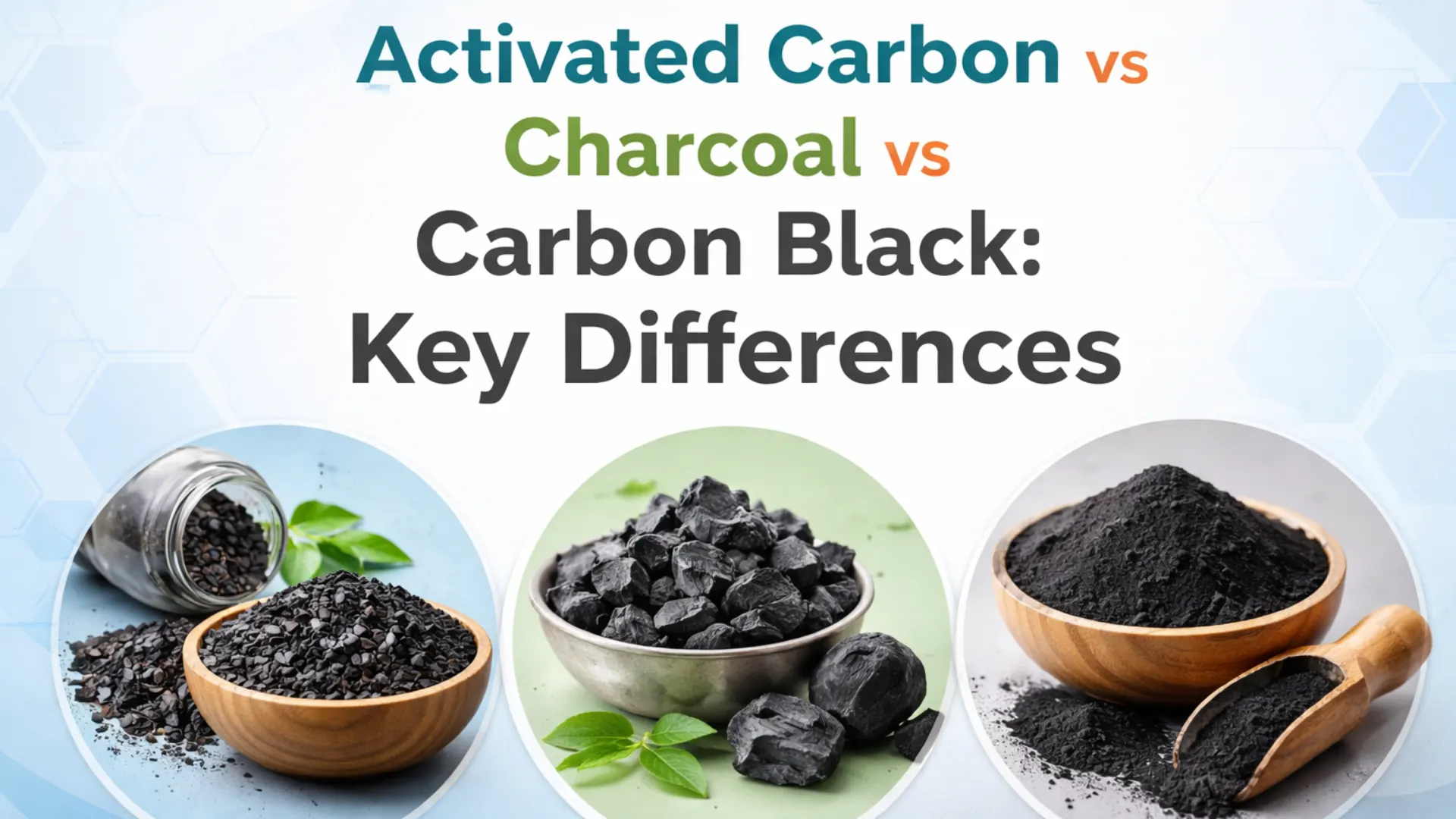
Activated Carbon vs Carbon Black: Key Differences
Introduction
When it comes to carbon-based materials, confusion is common—especially between activated carbon, charcoal, and carbon black. While they may look similar, their properties, manufacturing processes, and industrial applications are vastly different.
Understanding the activated carbon vs carbon black debate is crucial for exporters, investors, and industrial buyers. Choosing the wrong material can impact performance, cost, and compliance.
This guide provides a clear carbon material comparison to help you make informed decisions.
What is Activated Carbon?
Activated carbon is a highly porous form of carbon designed for adsorption. It is widely used in filtration and purification processes.
Activated Carbon Properties
- Extremely high surface area (500–1500 m²/g)
- Strong adsorption capacity
- Microporous structure
- Chemically stable
- Available in powdered, granular, and pellet forms
Activated Carbon Structure
The activated carbon structure consists of millions of tiny pores. These pores trap impurities, making it ideal for purification.
Common Applications
- Water treatment plants
- Air purification systems
- Gold recovery
- Food & beverage processing
- Pharmaceutical industries
Example
Municipal water treatment facilities use activated carbon to remove chlorine, odors, and organic contaminants.
What is Charcoal?
Charcoal is a basic carbon material produced by heating organic matter like wood in the absence of oxygen.
Charcoal Manufacturing
The charcoal manufacturing process involves pyrolysis:
- Wood or biomass is heated in low oxygen
- Volatile compounds are removed
- Solid carbon-rich residue remains
Key Characteristics
- Lower surface area than activated carbon
- Less porous
- Inexpensive and widely available
- Natural and eco-friendly
Common Uses
- Cooking fuel (BBQ charcoal)
- Metallurgical processes
- Soil improvement (biochar)
- Traditional filtration (limited use)
Important Note
Charcoal can be further processed to create activated carbon by increasing its porosity.
What is Carbon Black?
Carbon black is a fine black powder produced by incomplete combustion of hydrocarbons such as oil or gas.
Key Features
- Very fine particle size
- High tinting strength
- Conductive properties
- Reinforcement capabilities
Common Applications
Example
Over 70% of global carbon black production is used in tyres to improve durability and strength.
Activated Carbon vs Carbon Black vs Charcoal
Understanding the carbon black vs charcoal and activated carbon differences is essential for industrial decision-making.
1. Production Process
- Activated Carbon: Produced from charcoal or coal through activation (physical/chemical)
- Charcoal: Made by pyrolysis of biomass
- Carbon Black: Produced by incomplete combustion of hydrocarbons
2. Structure & Porosity
- Activated Carbon: Highly porous with large surface area
- Charcoal: Limited porosity
- Carbon Black: Non-porous or very low porosity
3. Functionality
- Activated Carbon: Adsorption and filtration
- Charcoal: Fuel and basic applications
- Carbon Black: Reinforcement and pigmentation
4. Industrial Applications
- Activated Carbon: Water treatment, air purification
- Charcoal: Cooking, metallurgy
- Carbon Black: Tyres, plastics, inks
5. Cost Comparison
- Charcoal: Lowest cost
- Carbon Black: Moderate cost
- Activated Carbon: Higher cost due to processing
Real-World Applications & Industry Insights
Water Treatment Industry
Activated carbon dominates due to its superior adsorption capability. Governments worldwide are investing in water purification, increasing demand.
Rubber & Tyre Industry
Carbon black is essential. Without it, tyres would wear out quickly.
Sustainable Solutions
Charcoal (especially biochar) is gaining popularity for eco-friendly agriculture and carbon sequestration.
Key Buying Tips for Exporters & Buyers
When choosing between these materials, consider:
- Application Requirement: Filtration vs reinforcement
- Surface Area Needs: High for adsorption
- Budget Constraints: Charcoal is cheaper
- Regulatory Compliance: Important for export markets
- Quality Certifications: Ensure consistent supply
Common Mistakes to Avoid
- Using charcoal instead of activated carbon for filtration
- Assuming all carbon materials are interchangeable
- Ignoring product specifications like iodine value and surface area
Why It Matters for Global Trade
The demand for carbon materials is growing rapidly across industries.
Exporters and procurement managers must understand:
- Product differentiation
- Market demand trends
- Pricing strategies
- Compliance requirements
Companies like Zenon Exports are actively supplying high-quality activated carbon, charcoal, and carbon black to global markets, helping buyers meet industrial and environmental needs with reliable sourcing.
Conclusion
The debate around activated carbon vs carbon black comes down to application and performance.
- Choose activated carbon for filtration and purification
- Use charcoal for fuel and basic applications
- Select carbon black for industrial reinforcement and pigmentation
Understanding these differences helps buyers and exporters make smarter decisions, reduce costs, and improve efficiency.
FAQs About Activated Carbon vs Carbon Black